
With great success and broad participation by representatives of local government, the academic community, and government officials, a workshop was held on Friday, July 10, 2026, in the conference room of the Region of Crete in Heraklion, a workshop aimed at strengthening the island’s resilience to climate change. The event was part of the European project “Climate Resilient crETE,” funded by the CLIMAAX Horizon Europe program.
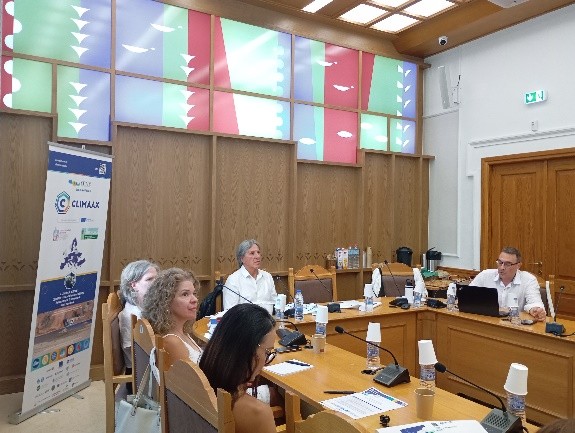
The Deputy Regional Governor for the Environment opened the proceedings with an introductory address to those in attendance. The event was attended by officials and scientists from the Region of Crete, specifically from the Directorate of Sustainable Development, the Directorate of Environment and Spatial Planning (Departments of Water Economy, Environment, Environmental Planning, Air Pollution and Air Quality), the independent Directorate of Climate Change (Department of Adaptation and Climate Resilience); from the academic community, there were scientific and research collaborators from the Technical University of Crete; and from the public administration, there were representatives from the Water Directorate of the Decentralized Administration of Crete.
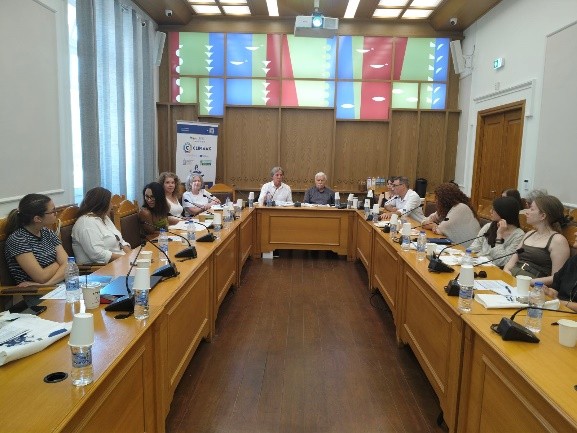
The scientific part of the workshop was structured around two main themes: (1) the assessment of climate change risks in Crete according to the CLIMAAX methodological framework, with an emphasis on droughts and floods, as well as a climate risk prioritization plan, and (2) the framework for expanding the Action Plan to address drought and water scarcity in the Region of Crete, with a parallel presentation of the plan to establish a Drought Observatory.
With the aim of promoting participatory governance, attendees were given a specialized questionnaire to assess and prioritize the climate risks of flooding and drought in the Region of Crete. This assessment framework focused on the following pillars: the severity of impacts per climate risk, the resilience capacity of existing or short-term planned measures, the overall risk priority, as well as potential maladaptation, since the proposed mitigation measures may, rather than reducing climate risk, actually increase it in the long term. Following the presentations, an extensive consultation and productive dialogue took place, with substantive proposals submitted by the participating organizations.