
CIVAL (“CLIMAAX in Val Cerrina”) is the CLIMAAX local Climate Risk Assessment (CRA) project developed in Valcerrina, Northern Italy. The initiative adopts a strongly participatory approach, combining CLIMAAX risk assessment workflows with residents’ lived experience, perceptions of climate change and locally identified adaptation priorities. The objective is clear: to ensure that climate risk information is not only scientifically robust, but also directly useful for local planning and decision-making.
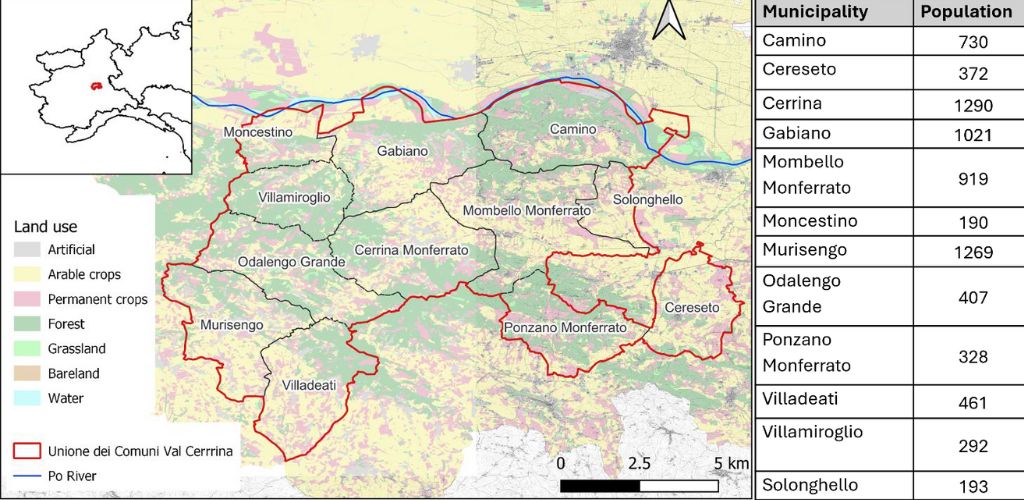
Figure 1: Location, boundaries and land use in Valcerrina (left). The red line delineates the boundary of the Valcerrina UoM. Names of member municipalities alongside their population are provided (right) (ISTAT, 2021).
A participatory approach from the start
Community engagement has been a core pillar of CIVAL since its inception. Through a structured and inclusive process, the project actively involves local residents and stakeholders to tailor the assessment to the specific characteristics of the Valcerrina area and to strengthen the uptake of results at the municipal level.
Phase 1: listening to the territory
Residents’ survey (July 2025)
The first phase of CIVAL focused on collecting local knowledge and perceptions through an online residents’ survey, which gathered more than 54 responses and informed the Phase 1 deliverable.
The results highlight that climate impacts are already tangible in the area.
- 92% of respondents reported experiencing at least one extreme weather event in the past 20 years, most frequently heavy rainfall, followed by droughts, landslides, heatwaves and flooding.
- Residents also reported damage to private property, disruptions to public infrastructure and impacts on local economic activities.
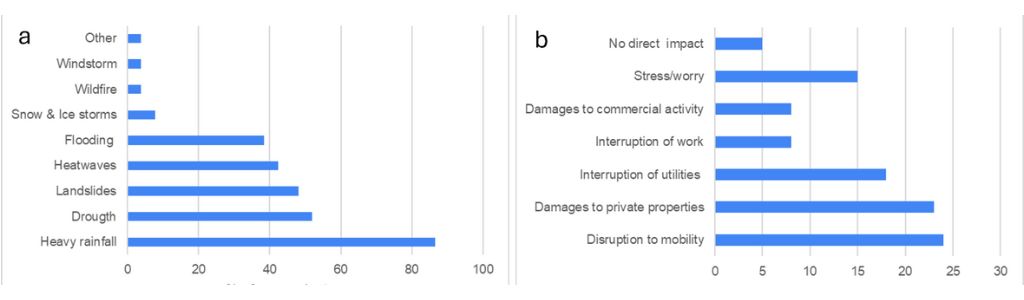
Figure 2: (a) extreme events experienced in the past in Valcerrina and (b) reported damage
Perceived trends point to increasing heavy rainfall, heatwaves and droughts, while reported increases for floods and landslides are more moderate. Wildfire trends remain less clear based on perceptions alone.
Looking ahead, 58% of respondents declared themselves moderately or highly worried about future climate impacts, with many expecting moderate (46%) or significant (38%) changes to their way of living.
The survey also revealed a clear preparedness gap: 78% of respondents perceive their municipality as not prepared or express neutral views, while only 20% consider it somewhat prepared.
First stakeholders’ workshop (31 July 2025, Gabiano)
To validate and expand on the survey findings, a first local workshop was held in Gabiano, bringing together more than 30 participants. The session enabled discussion of preliminary results, collection of feedback and identification of additional risk priorities for the next phase of the project.
From insights to priorities, participants clearly highlighted the need for:
- improved maintenance of road networks and drainage systems (74%), and
- more climate-resilient agricultural practices (56%), including irrigation solutions, drought-resistant crops and rainwater harvesting.
Phase 2 milestone: Climate Fresk workshop in Gabiano
Building on this foundation, CIVAL entered Phase 2 with a new participatory milestone. On 22 January 2026, a second local workshop was organised in Gabiano, targeting local environmental organisations such as Legambiente Casale, Parco del Po Piemontese and MadreSelva Villadeati.
The workshop took the form of a three-hour interactive lab based on the Climate Fresk methodology. Designed as both an educational and participatory tool, the session supported a shared understanding of climate change, explored potential impacts specific to the Valcerrina area and fostered discussion around possible local adaptation actions.
Used alongside the CLIMAAX analytical framework, the Climate Fresk methodology proved to be an effective facilitation approach, strengthening dialogue and collective awareness while demonstrating a replicable format suitable for schools, community events and environmental awareness initiatives.
Strengthening local ownership of climate risk information
Through surveys, workshops and interactive methodologies, CIVAL shows how combining scientific assessment with community knowledge can enhance the relevance and impact of climate risk assessments. By actively engaging local actors, the project contributes to building shared ownership of climate information and supports more informed and resilient local planning in Valcerrina.