
Through its CLIMAAX project, Multi-Risk Assessment for Sustainable Coastal Development, the Municipality of Neum is assessing risks affecting its Adriatic coast and hinterland. Supported by the EU Horizon Europe programme, the work addresses sea-level rise, drought, flooding and extreme weather, with particular attention to the implications for tourism, agriculture and marine fish farming.
Local people contribute their experience
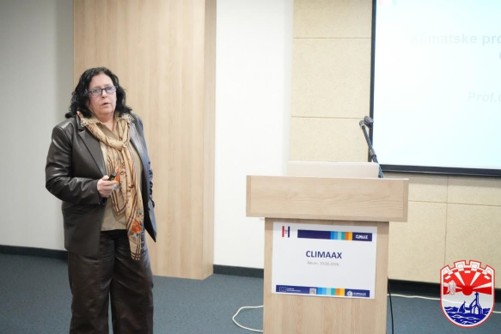
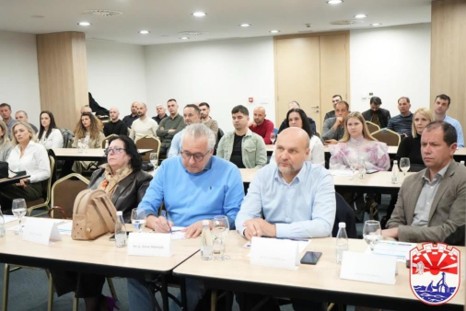
Workshops held during 2025 and 2026 prompted residents and local businesses to contact the project team and share their experiences. Local practitioners subsequently joined the workshops as speakers, bringing their knowledge into discussions alongside scientific presentations.
A workshop on 19 March 2026 at Hotel Marea brought together 45 stakeholders from Neum and neighbouring communities. Speakers included representatives of marine fish farming and municipal services, connecting the discussion of climate risks with the management of local businesses and public services.
The experiences shared across the engagement process made the impacts tangible. Olive growers reported smaller fruit, beekeepers described reduced honey production, and fish farmers noted slower fish growth. Residents also described cracked soils, dried natural ponds and reduced water availability for agriculture. These observations helped the team understand local concerns and discuss how climate pressures affect livelihoods and ecosystems.
Using the assessment to guide adaptation
As work on the third project phase develops, the assessment data and risk maps provide a basis for identifying adaptation priorities. Areas under consideration include protecting coastal infrastructure, reducing the vulnerability of tourism and food production to heat and water shortages, and strengthening civil protection and preparedness for extreme weather.
The next step is to connect these priorities with spatial planning, water management and local risk management. The workshops have established a practical way to keep residents and businesses involved: people who experience the impacts can help explain where adaptation is most needed and what it must achieve.