
Connecting disaster risk reduction and climate adaptation | Climate-resilient regions on the road to 2030
Climate-related hazards are becoming more frequent and more severe across Europe, with implications that vary across European regions depending on their risk profiles and capacity to anticipate and manage them. Floods, droughts, heatwaves, wildfires, and windstorms affect local communities differently, and the response to evolving climate realities is inherently driven by regional and local-scale interventions.
Preventing and limiting damages and losses requires a multi-sectoral policy approach and coherence across two domains that have historically developed in parallel: Disaster Risk Reduction (DRR), shaped internationally by the Sendai Framework for Disaster Risk Reduction 2015 – 2030, and Climate Change Adaptation (CCA), driven by the UNFCCC processes, through the Global Goal on Adaptation and the Global Stocktake. In recent years, these two fields have been progressively converging, with significant room to strengthen their connections. The Sendai Framework has shifted its focus towards disaster risk anticipation, and the IPCC has featured response integration more prominently in its Sixth Assessment Report.
Bridging these two key areas of climate risk management is fundamental to ensuring resilience and avoiding maladaptation, especially in Europe, where these fields address overlapping challenges but operate through parallel knowledge and practice bases. The UNDRR (2025) report on DRR-CCA coherence highlights that strategic coherence is largely driven by international frameworks, whereas local implementation and regulation remain fragmented. Recent EU policy developments signal a growing commitment to integration, with the Preparedness Union Strategy (2025) promoting an all-hazards approach and the European Framework for Climate Resilience expected to further enhance policy coherence from 2026 onward.
On the occasion of the International Day for Disaster Risk Reduction, the CLIMAAX and CARMINE projects took stock and looked ahead, highlighting what has been achieved toward the 2030 horizon and bringing attention to ever more impending climate adaptation challenges. The event connected these two conversations through a high-level expert panel.
Speakers:
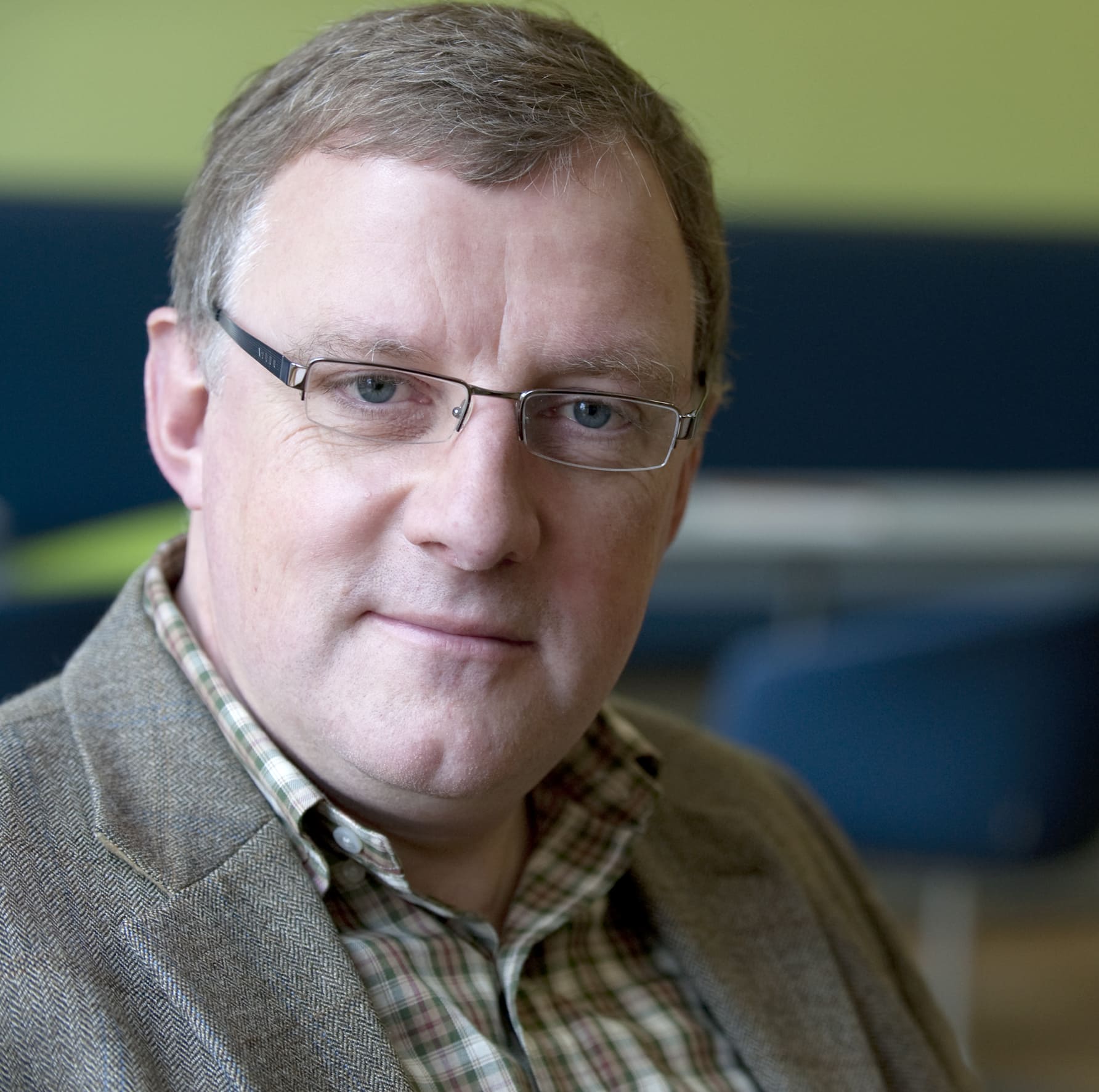
Reimund Schwarze is a professor of economics at the Helmholtz Centre for Environmental Research (UFZ) in Leipzig, Germany, where he works within the Department of Economics and the Working Group on Energy. His research spans European and international climate policy, the economic dimensions of climate adaptation, the management of natural hazards, and environmental liability and insurance. Over more than two decades, he has contributed to major international assessments and projects, including work with the IPCC-adjacent research networks, the EU-funded PLACARD and ESPREssO projects on climate adaptation and disaster risk reduction, and CONHAZ, a project on the costs of natural hazards. He has 15+ years of engagement with the German Committee for Disaster Reduction.
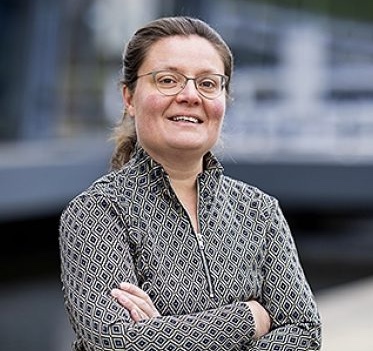
Frederiek Sperna Weiland is a climate risk specialist at Deltares, an independent research institute for water in The Netherlands. Her research focuses on climate risk assessments worldwide and at all scales. In the past 20 years she applied and further developed her expertise in many projects in the Netherlands, Europe, Africa and Asia. She was leading the development of the discharge scenarios for the Dutch national climate scenarios. She has been involved in several H2020 and Horizon Europe projects and currently leads the HE CLIMAAX project that enables climate risk assessments for European regions.
Eleni Toli is a research associate and Senior Project Manager at the Athena RC and at the Department of Informatics and Telecommunications at the University of Athens. She is a member of AE4RIA, the Alliance of Excellence for Research and Innovation on Αephoria. She has been involved in the scientific and technical coordination of several EU-funded projects related to Open Science and Open Data, European Open Science Cloud (EOSC), Research Data Infrastructures, Data Repositories and Digital Social Innovation. She has been working on methodologies for specifications and requirements elicitation for the development of ICT solutions and on tools for stakeholder engagement. Eleni is the manager of the Innovative Systems for Sustainable Development & Action Living Lab (ISSIDA-LL).
The event is co-organized with the CARMINE project. The project overarching goal is to help metropolitan communities become more climate-resilient by co-producing knowledge-based tools, strategies and plans for enhanced adaptation and mitigation actions, addressing the Charter of the EU Mission on Adaptation to Climate Change by 2030.