
The Alto Tâmega and Barroso region in northern Portugal has completed the first two phases of its CLIMAAX project, CLIMAAX_AT, and is now working on the development of climate adaptation measures.
Led by the Comunidade Intermunicipal do Alto Tâmega e Barroso (CIMAT), the initiative aims to improve the assessment of climate risks across the territory and support decision-making on adaptation and civil protection planning.
The initial climate risk assessment (Phase 1) identified four priority hazards for the region: wildfires, droughts, heatwaves and floods. The second phase focused on refining the assessment through more detailed local information and data.
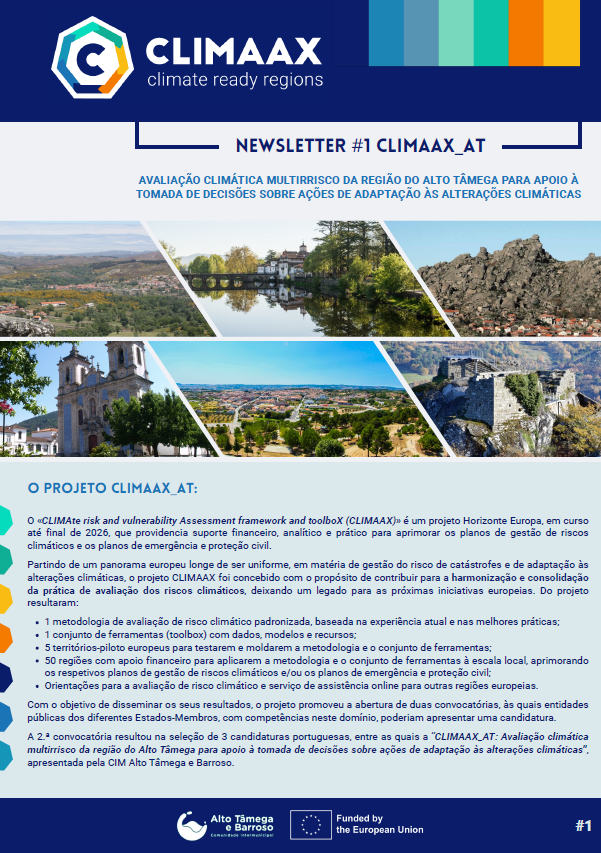
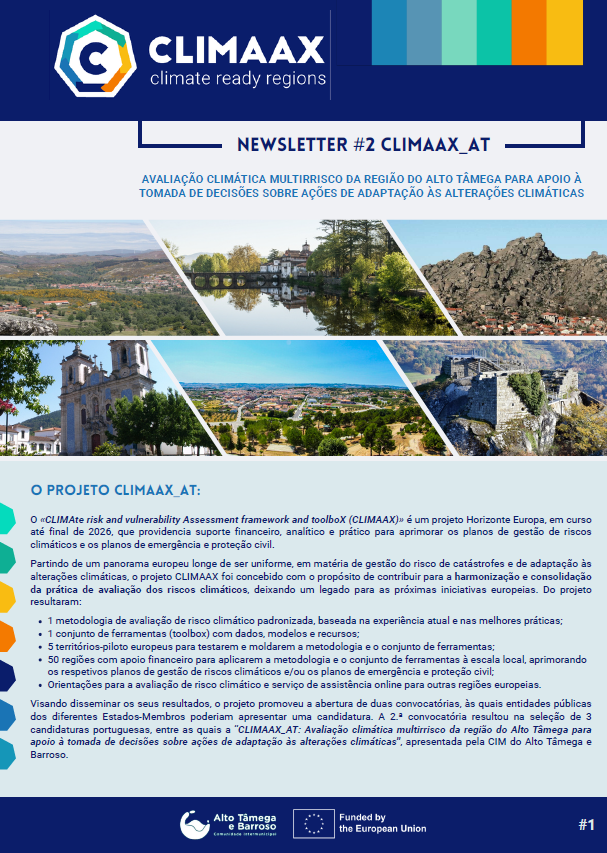
Stakeholder engagement has been an important part of this process. On 5 February 2026, CIMAT organised an online participatory session to present the project, share the initial assessment results and discuss the next steps with regional stakeholders. Participants were also invited to contribute local information and identify relevant data sources, including information held by Portuguese public institutions, to support the second phase.
Following the session, CIMAT shared the project presentation and its first newsletter with participants, summarising the main findings of Phase 1. A subsequent communication also circulated the newsletters produced during the development of the first two phases.
With Phases 1 and 2 now complete, CLIMAAX_AT has moved into Phase 3, which focuses on formulating climate adaptation measures. This next step aims to translate the risk assessment findings into practical inputs for regional planning and climate resilience.